Practitioner-ready resources for modern clinical practice.
Cellular Frameworks publishes finished, practitioner-ready PDF resources that give clinics a clear, structured way to explain complex physiology to clients — without relying on generic wellness language or oversimplified claims.
Featured Collections
Grouped practitioner resources for clinics building a complete, structured approach to menopause consultations.
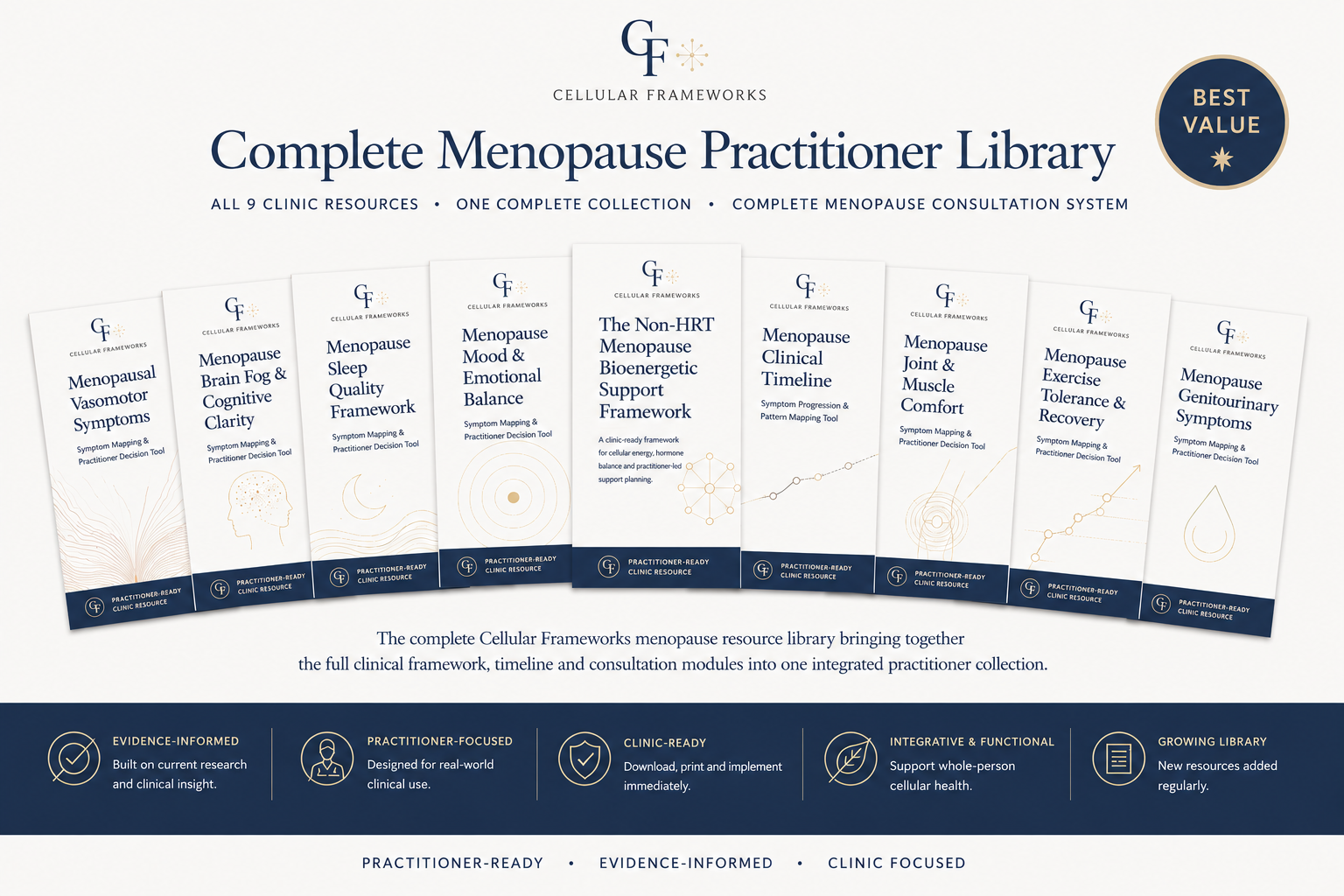
Complete Menopause Practitioner Library
The complete practitioner consultation system for structured menopause assessment, clinical planning and patient support.
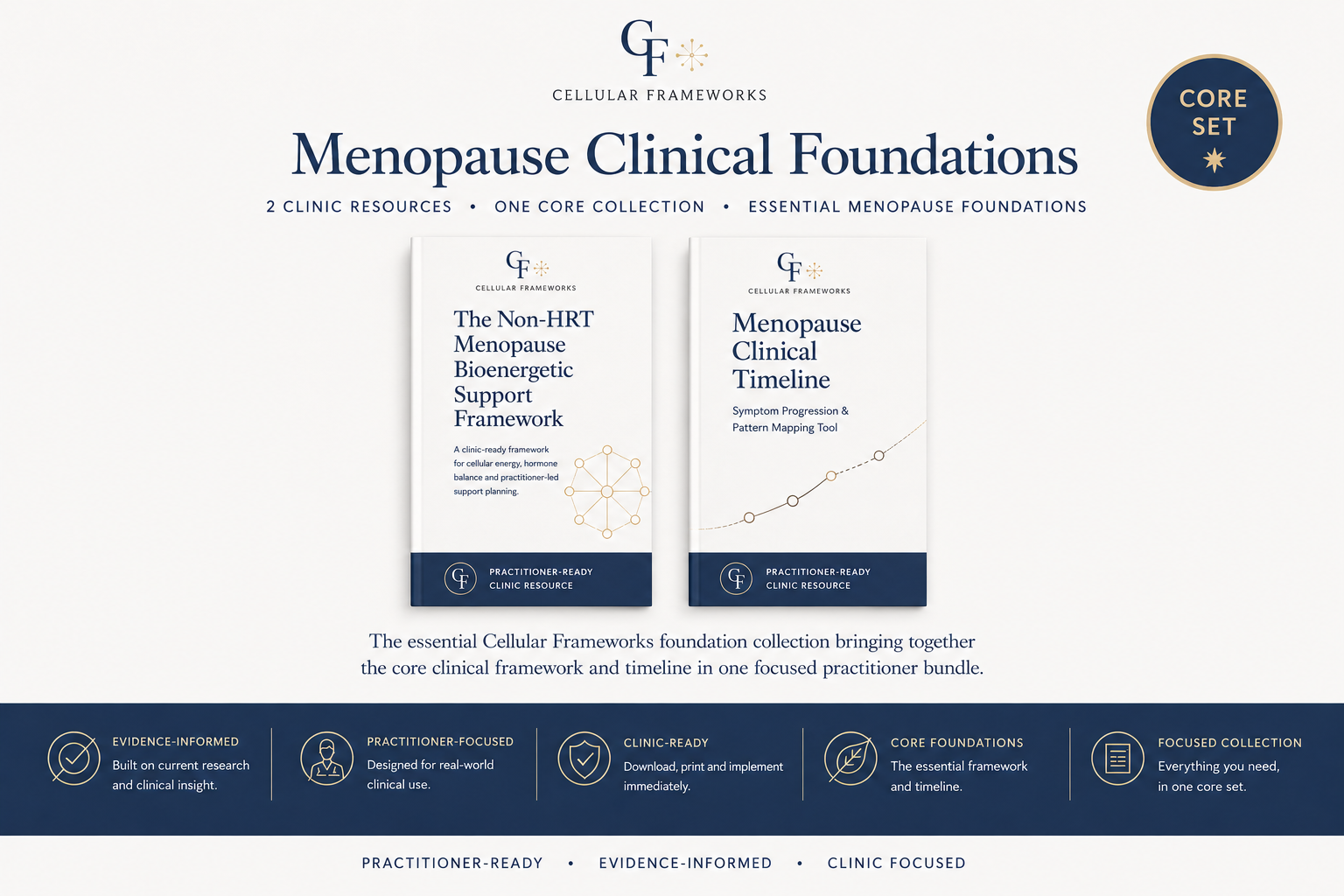
Menopause Clinical Foundations
The essential clinical foundation for structured, evidence-informed menopause consultations.
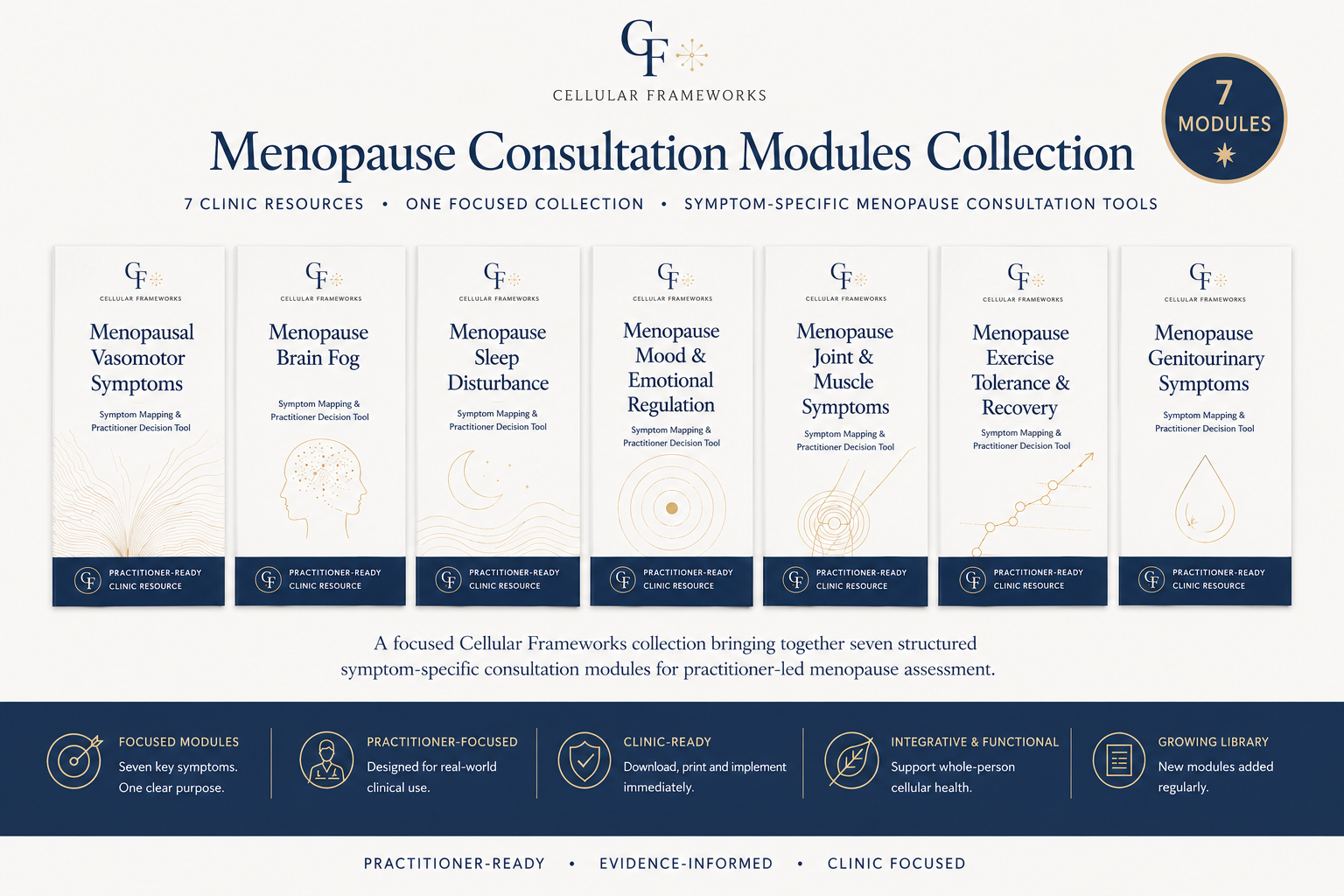
Menopause Consultation Modules
Structured consultation tools for focused, symptom-specific menopause assessment.
Individual Menopause Resources
Focused, symptom-specific practitioner tools for structuring individual menopause consultation conversations.
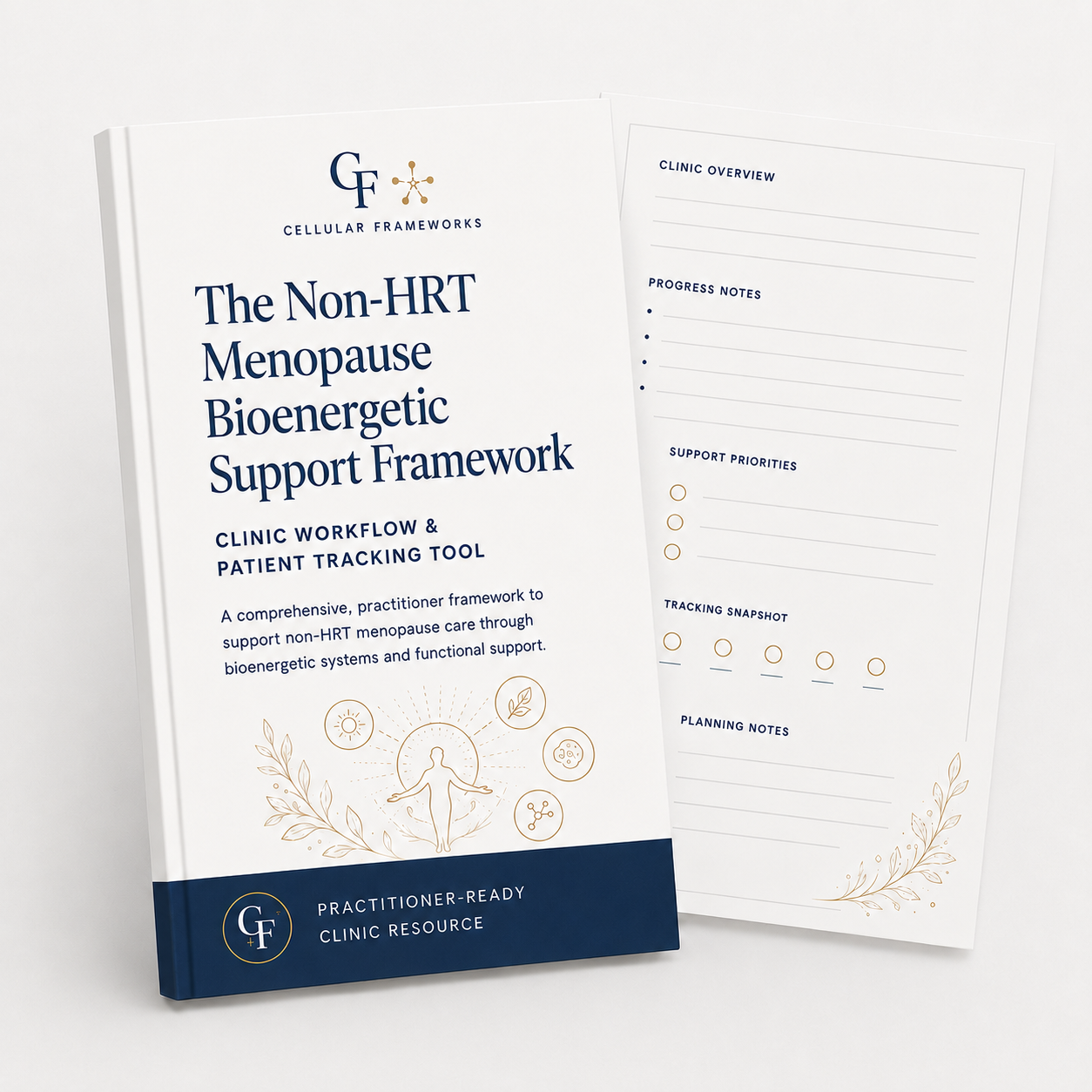
The Non-HRT Menopause Bioenergetic Support Framework
Use this framework to structure conversations with patients who are not using HRT and are experiencing changes in energy, resilience or recovery through the menopause transition. It helps practitioners connect the individual presentation with relevant bioenergetic context, explain the physiology clearly, and move toward more individualized assessment and support planning rather than generic menopause advice.
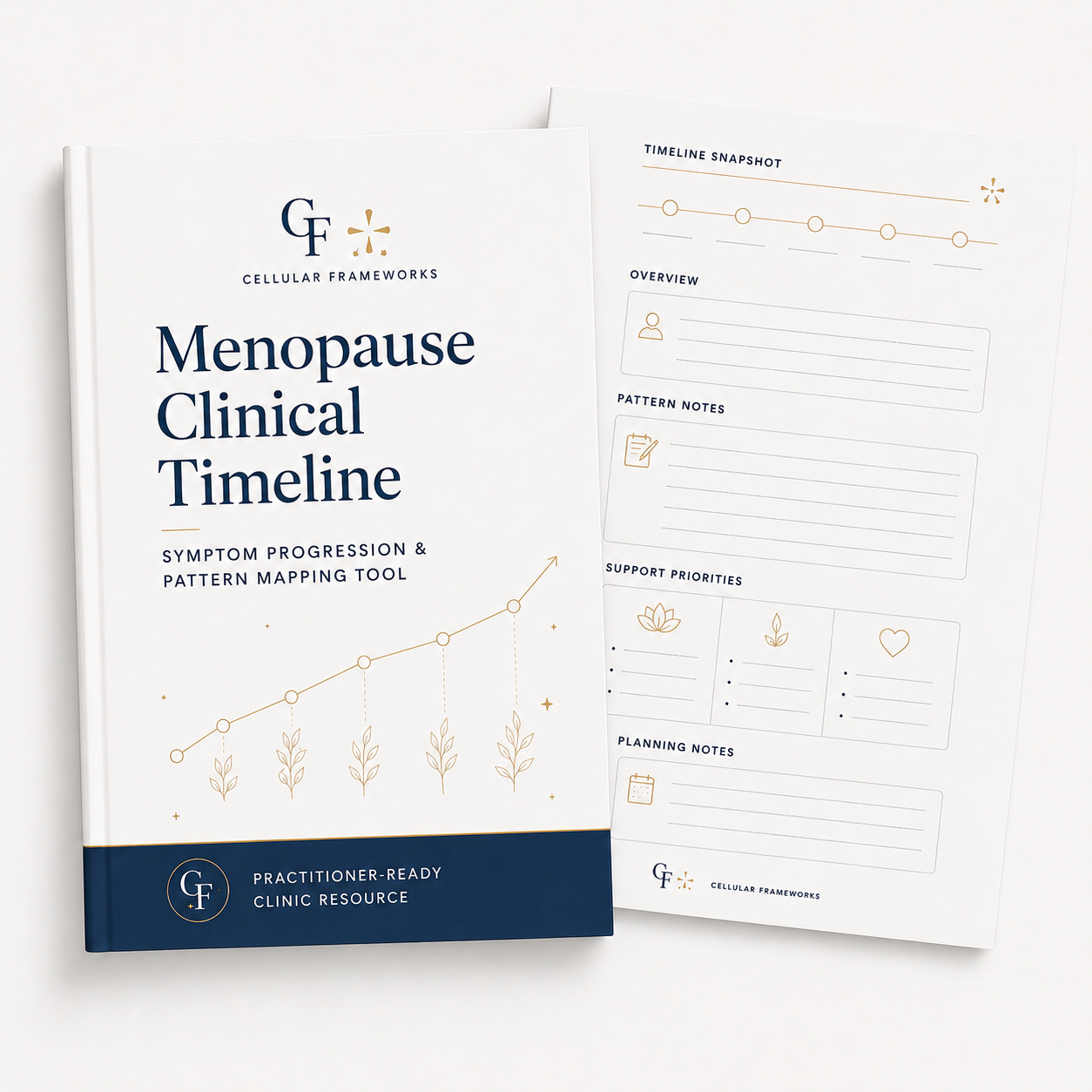
Menopause Clinical Timeline
Use this tool to reconstruct how a patient’s symptoms emerged and changed across the menopause transition. It helps practitioners separate longstanding issues from newer or worsening patterns, identify clinically relevant overlaps and priorities, and decide what deserves closer assessment within the individual consultation.
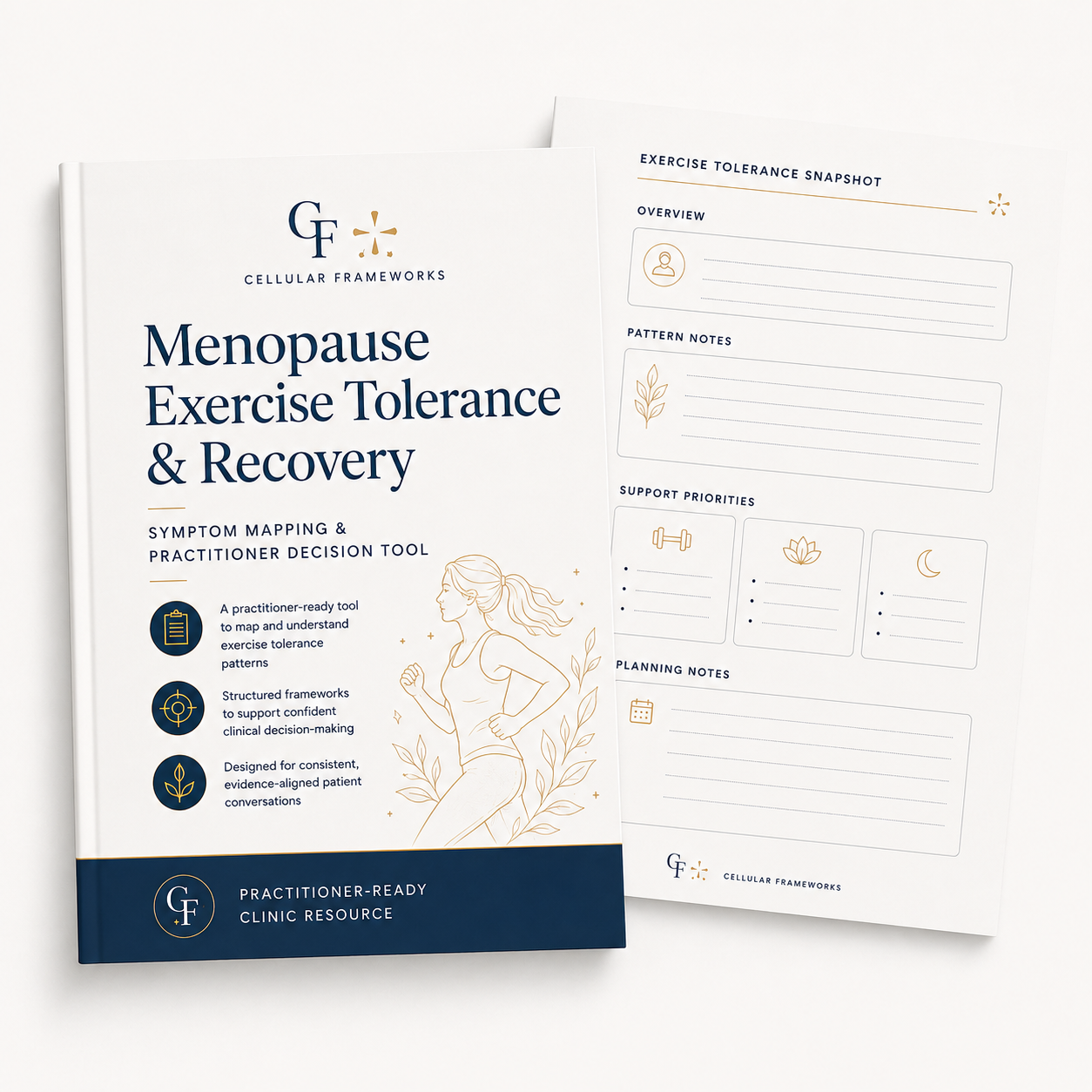
Exercise Tolerance & Recovery
Use this tool when a patient reports that exercise feels harder, recovery has slowed or activity is triggering disproportionate fatigue or symptoms. It helps practitioners characterize the pattern, explore relevant contributing context and make more individualized decisions about assessment, pacing, recovery support and referral where needed.
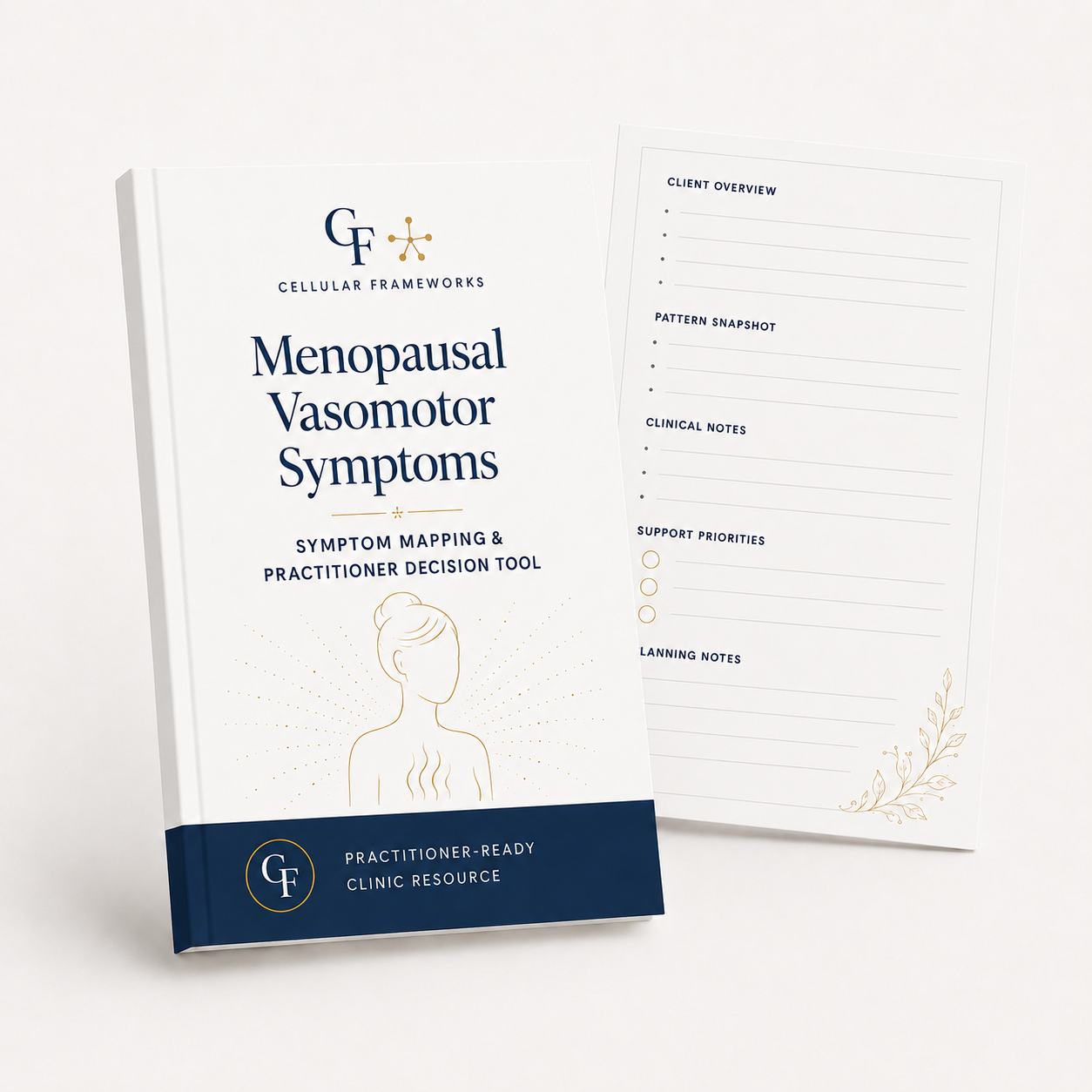
Vasomotor Symptoms
Use this tool to understand how vasomotor symptoms are actually presenting for the individual patient rather than treating hot flushes and night sweats as a single generic complaint. It helps practitioners clarify timing, severity, triggers, associated symptoms and relevant context so that assessment, monitoring and care planning can be better targeted.
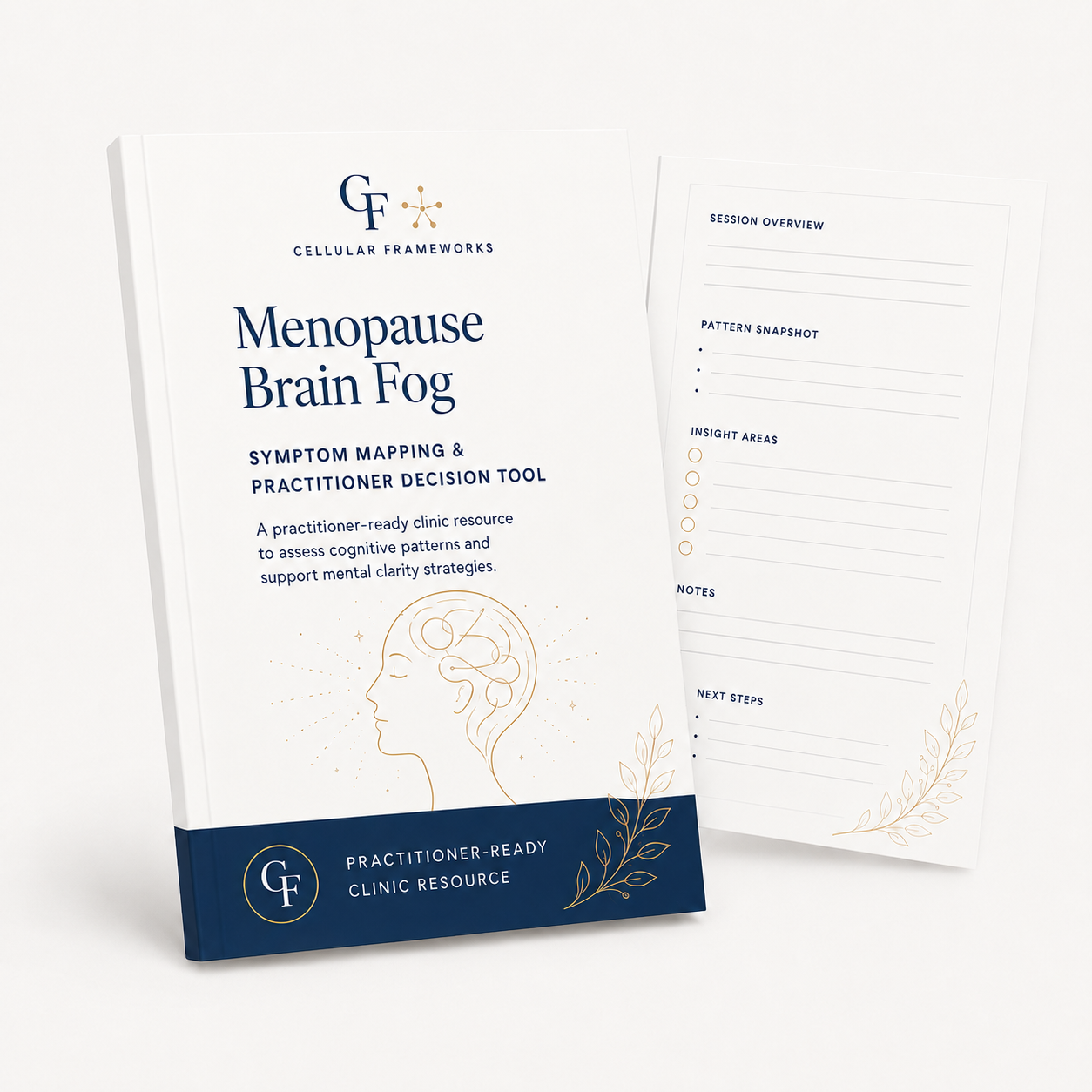
Brain Fog
Use this tool when a patient reports brain fog, memory difficulty, reduced concentration or changes in mental clarity. It helps practitioners define the cognitive pattern, examine relevant sleep, stress, medication, nutritional and health context, and determine what may need further assessment, monitoring or referral.
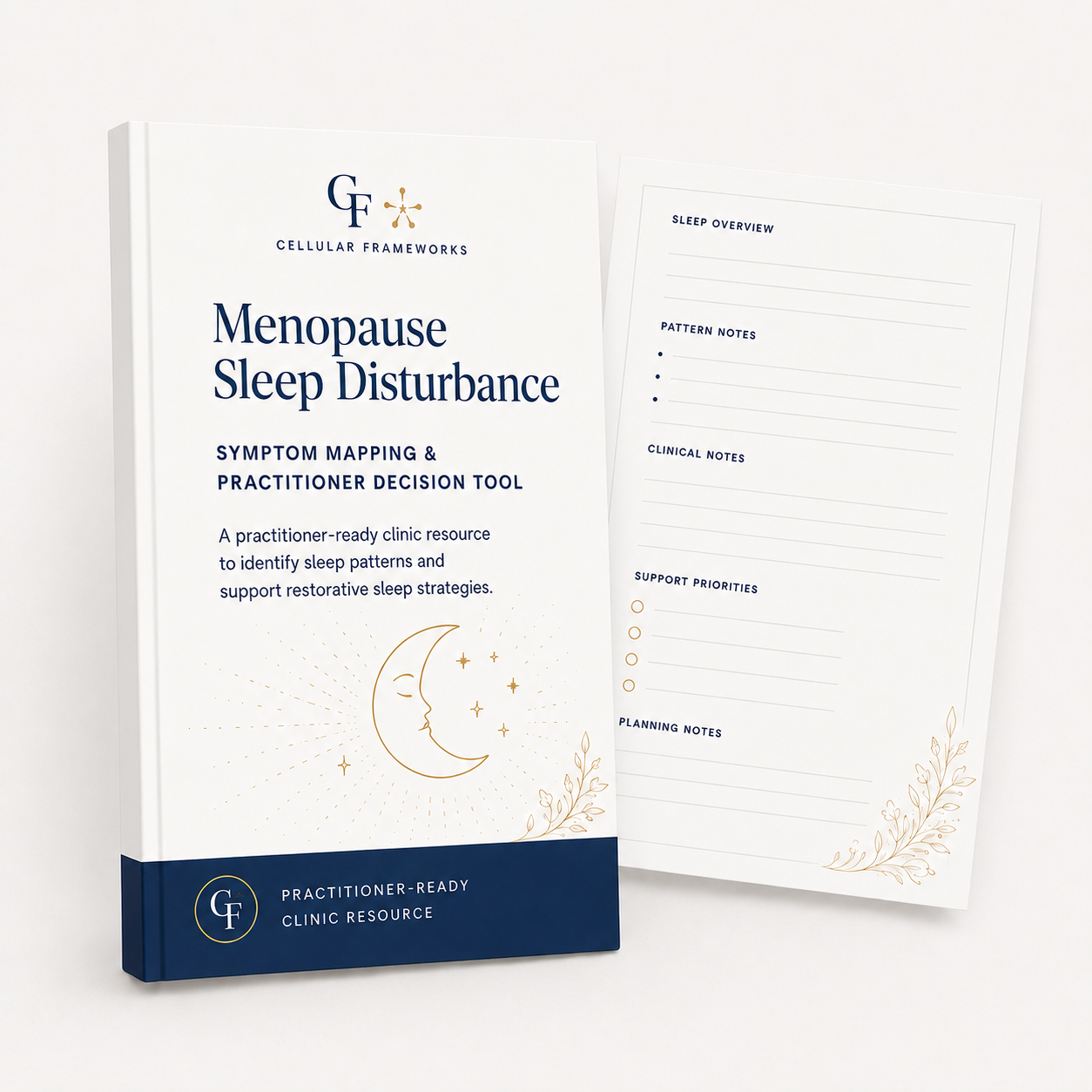
Sleep Disturbance
Use this tool to identify the specific sleep pattern behind a broad complaint of “poor sleep.” It helps practitioners distinguish sleep-onset, maintenance, early-waking and non-restorative patterns, explore the factors that may be contributing, and build a more individualized assessment and support plan.
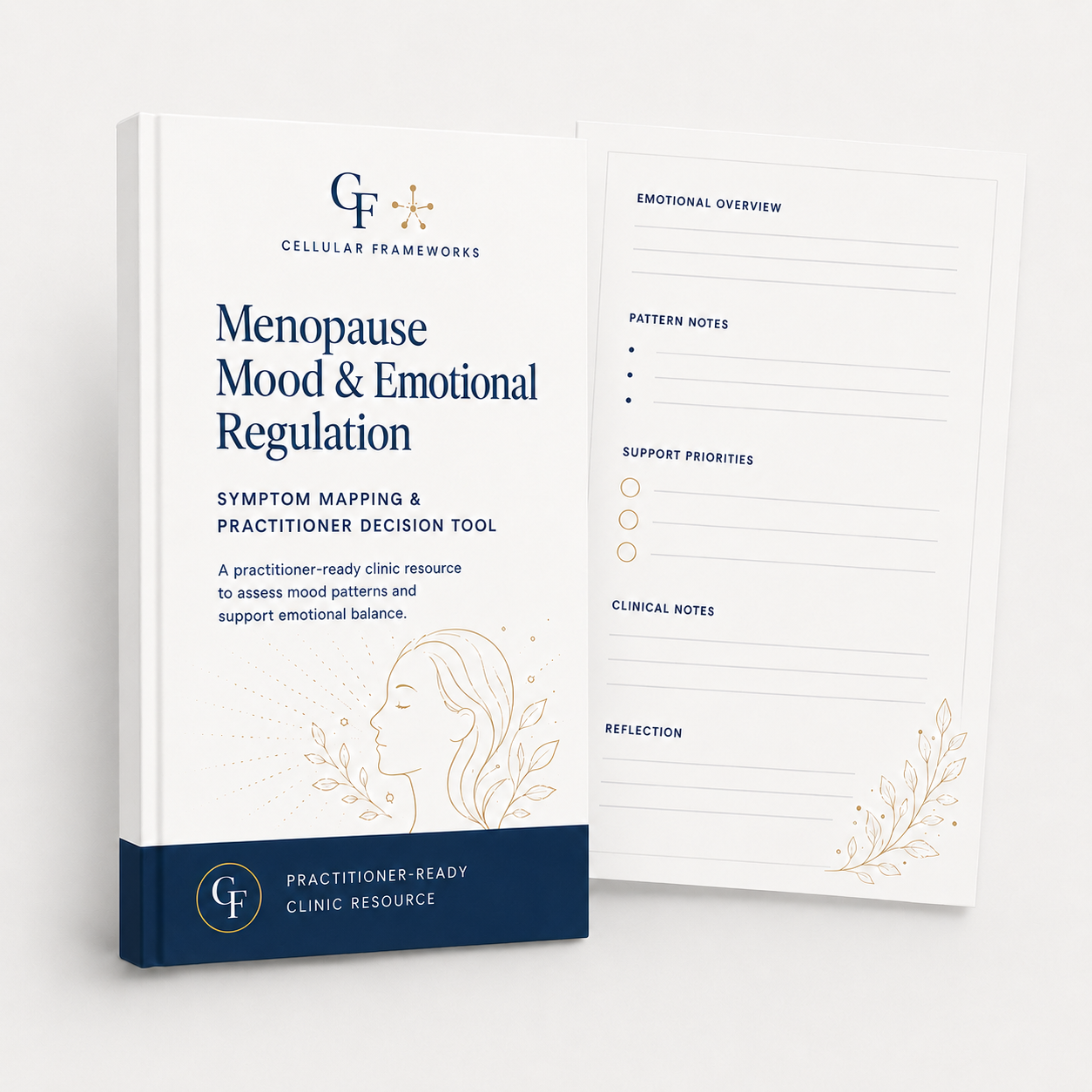
Mood & Emotional Regulation
Use this tool to explore mood change, irritability, emotional reactivity and reduced regulation capacity in a structured and clinically sensitive way. It helps practitioners place the patient’s emotional symptoms in their wider menopause, health and life context, identify patterns that need closer attention, and support appropriate care planning or referral.
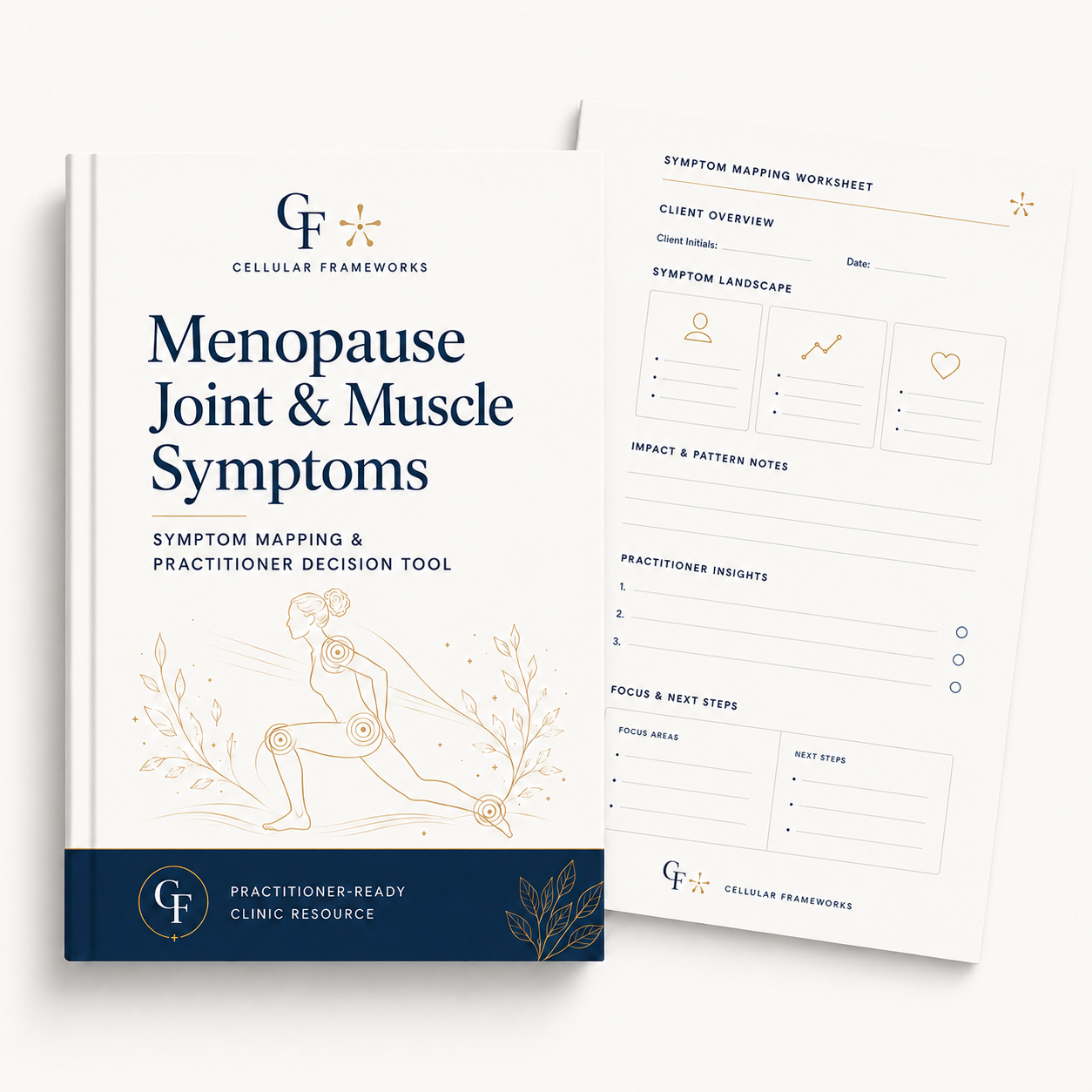
Joint & Muscle Symptoms
Use this tool when joint stiffness, muscle discomfort, reduced mobility or changes in physical resilience become part of the menopause consultation. It helps practitioners characterize the pattern and functional impact, explore relevant contributing context, and distinguish symptoms that may fit the broader presentation from those requiring separate assessment or referral.
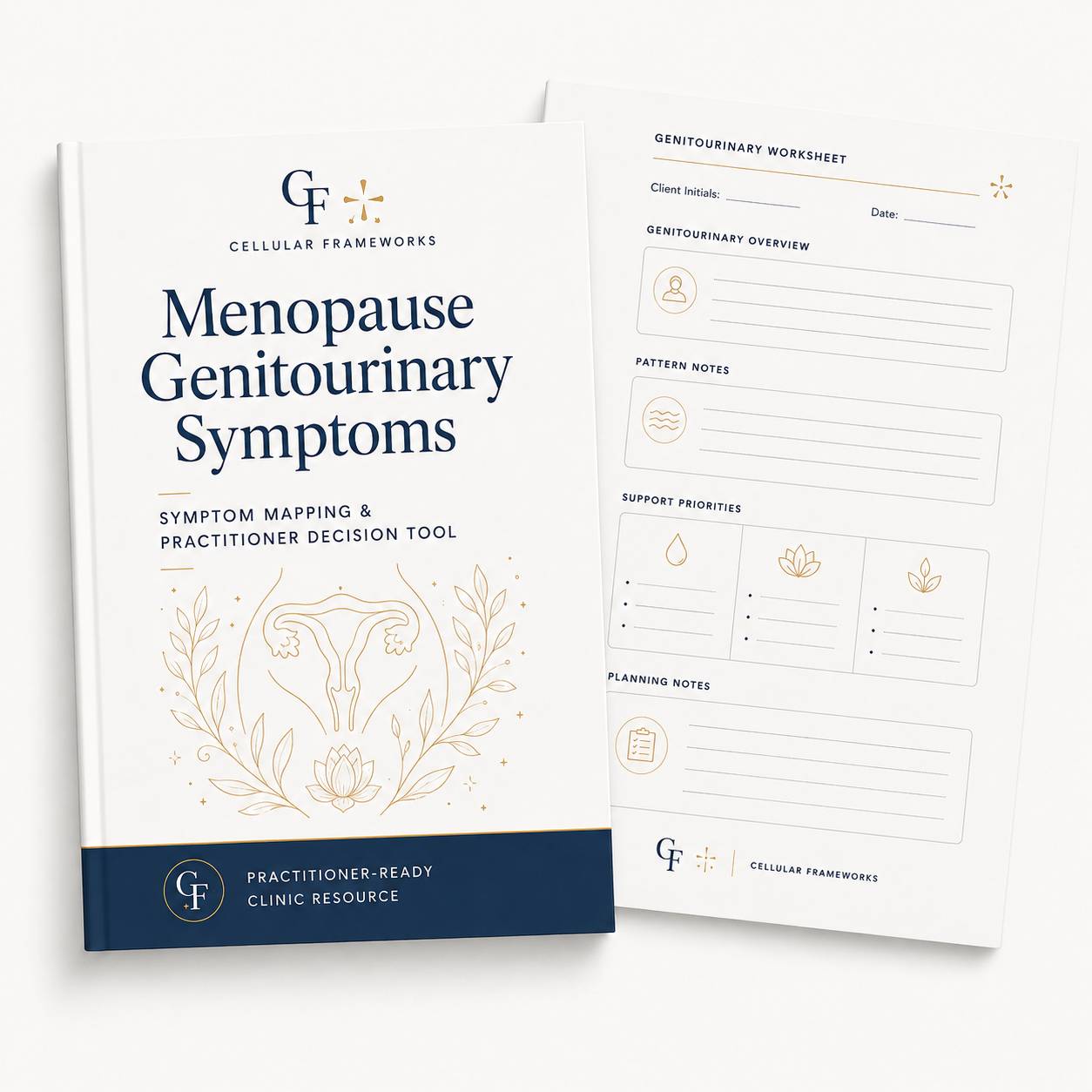
Genitourinary Symptoms
Use this tool to make vaginal, vulval, sexual and urinary symptoms easier to discuss and assess without reducing them to a generic menopause checklist. It helps practitioners capture the individual symptom pattern, severity and impact, identify clinically relevant overlaps or red flags, and support appropriate assessment, treatment planning or referral.
Additional Clinical Frameworks
Practitioner-ready resources for related cellular health, nervous system, pelvic-floor and energy conversations.
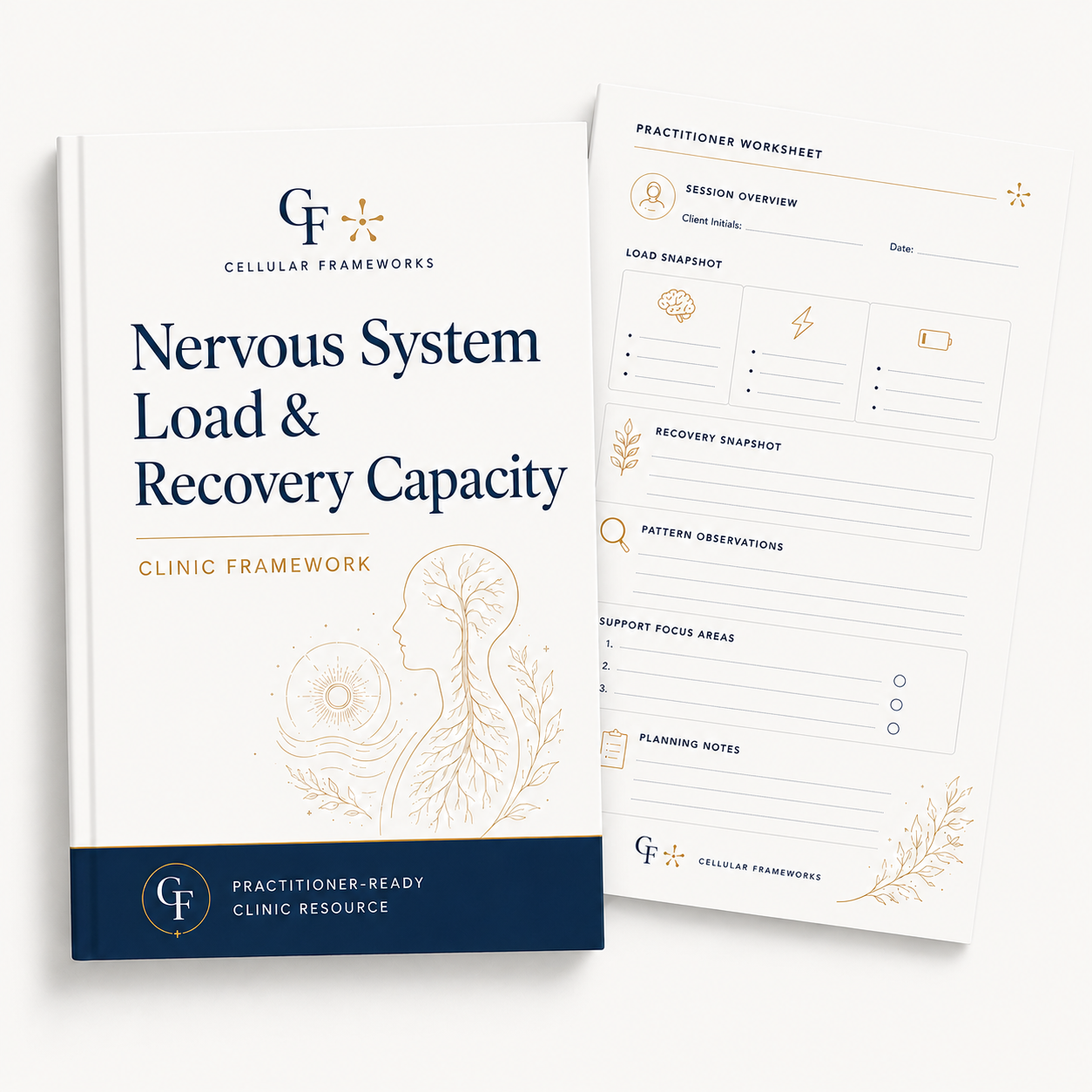
Nervous System Load & Recovery Capacity Clinic Framework
Use this framework when a patient presents with persistent overload, bracing, overwhelm, poor recovery or stress-linked symptom escalation. It helps practitioners organize the individual pattern, explore the interaction between stress physiology, sleep and recovery capacity, and identify where targeted support, further assessment or referral may be appropriate.
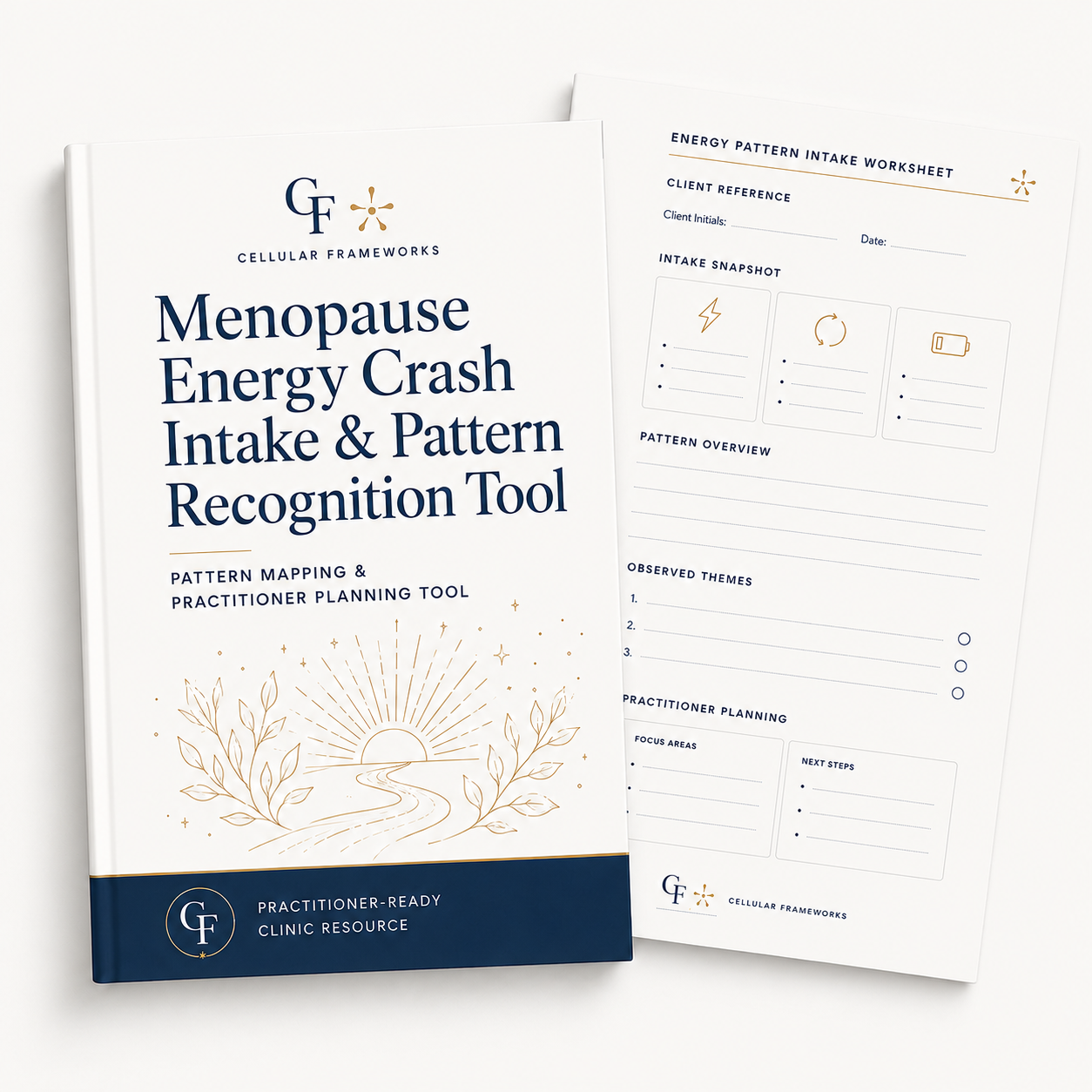
Menopause Energy Crash Intake & Pattern Recognition Tool
Use this tool when a patient describes sudden energy drops, recurrent crashes or fatigue that varies through the day. It helps practitioners identify timing and triggers, examine relevant eating, sleep, activity, stress, medication and health context, and move from a vague fatigue complaint toward more focused assessment and individualized support planning.
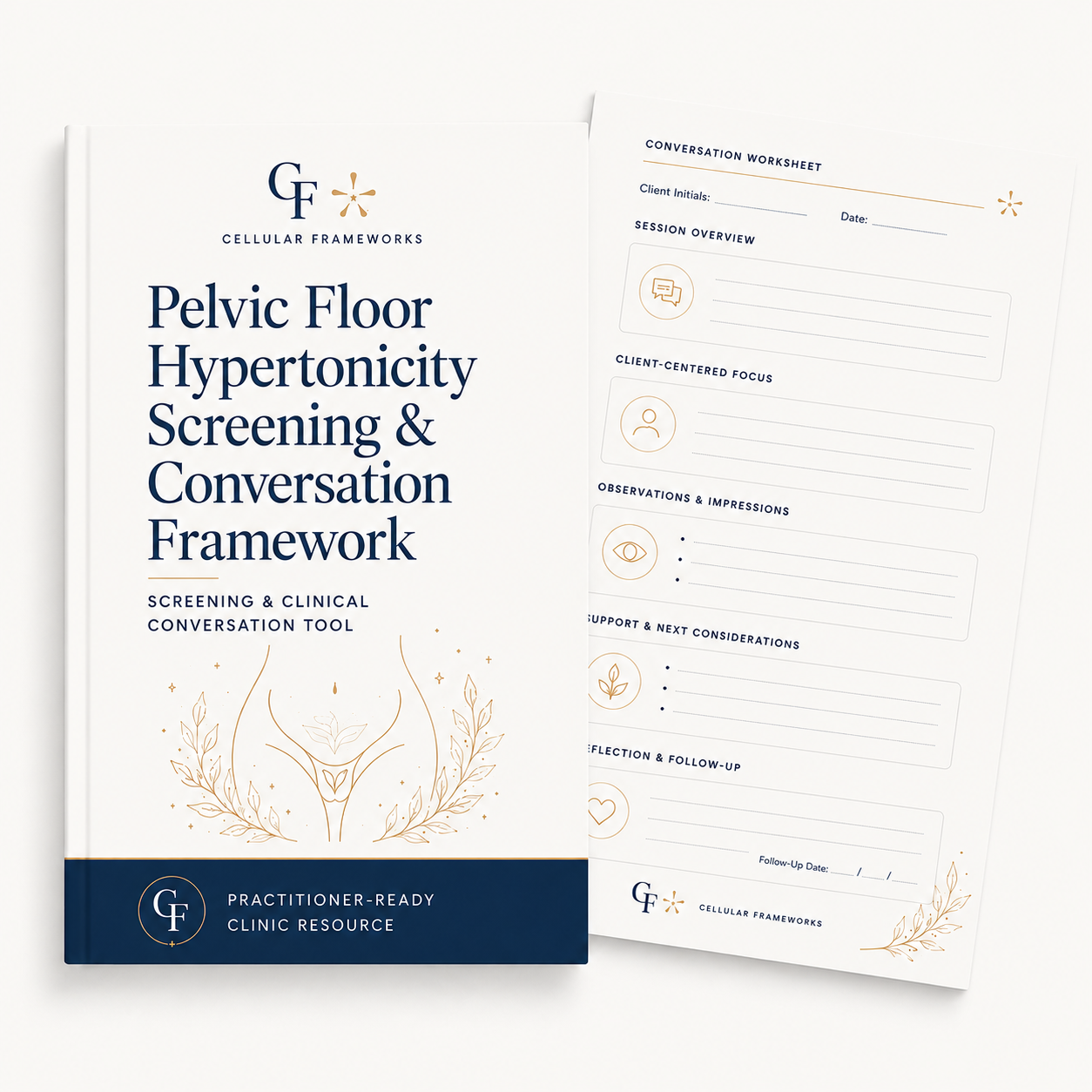
Pelvic Floor Hypertonicity Screening & Conversation Framework
Use this framework when pelvic pain, pressure, urinary, bowel or sexual symptoms may involve pelvic floor overactivity or hypertonicity. It helps practitioners obtain a clearer and more sensitive history, recognize symptom patterns that may otherwise be missed, and identify when pelvic health assessment or specialist referral should form part of the patient’s next step.
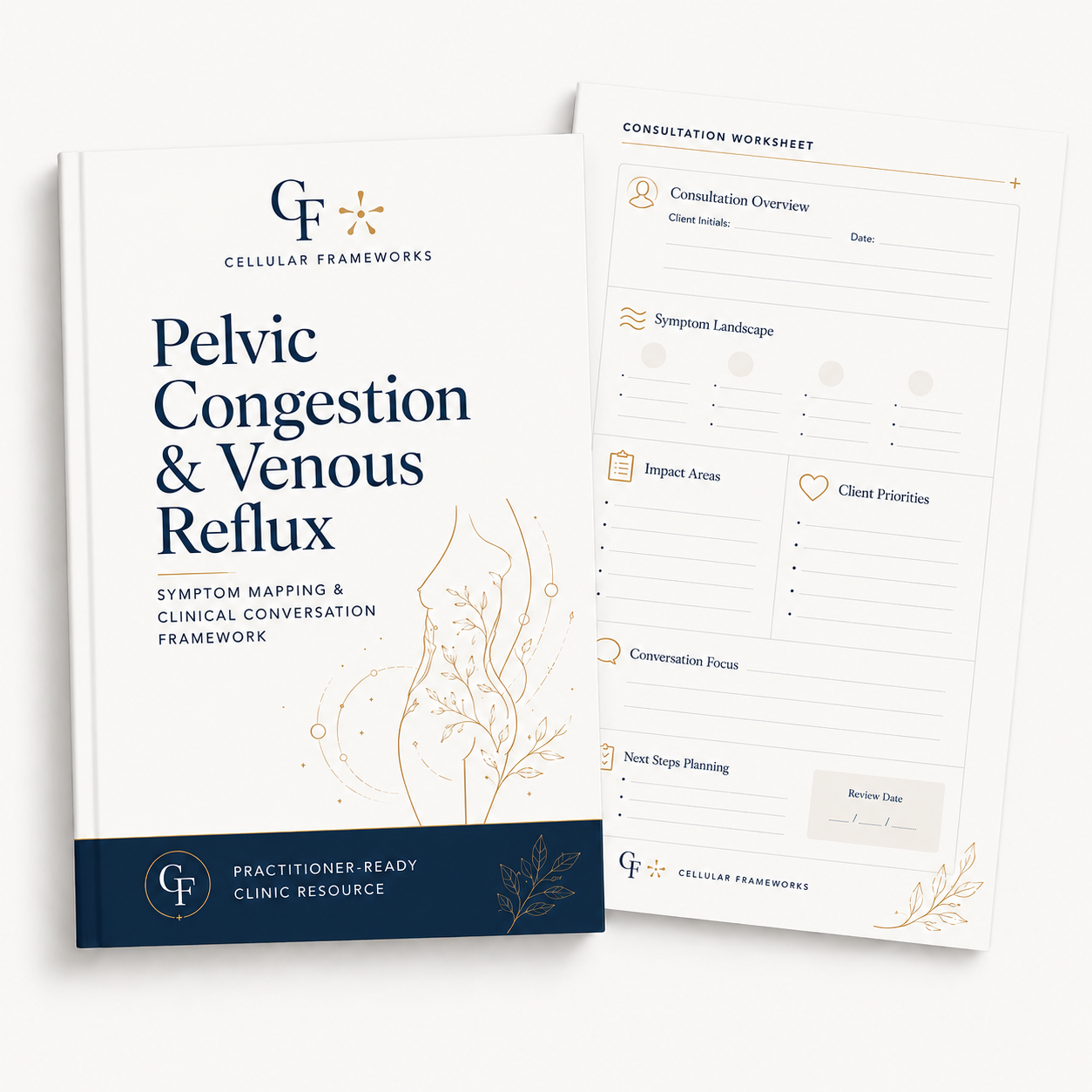
Pelvic Congestion
Use this tool when pelvic heaviness, pressure, pain or other symptoms raise the possibility of a venous-pattern presentation. It helps practitioners capture the individual symptom pattern and relevant clinical context, distinguish potentially overlapping presentations, and prepare a clearer, more clinically useful referral when further investigation or specialist assessment is appropriate.
Female Hair Loss & Shedding
Use this framework when a patient presents with hair loss, thinning or excessive shedding and the likely explanation is not immediately clear. It helps practitioners characterize the individual pattern, capture relevant hormonal, nutritional, medication, health and lifestyle context, distinguish overlapping contributors, and decide what warrants further assessment, investigation, referral or individualized care planning.
G6PD & Pentose Phosphate Pathway Dietary Blueprint
Use this blueprint when G6PD status or pentose phosphate pathway physiology is relevant to a nutrition or cellular-health consultation. It helps practitioners explain the redox context clearly, connect biochemical considerations with the individual patient’s dietary and clinical picture, and support a more considered nutrition discussion without defaulting to generic antioxidant or “mitochondrial support” advice.
Licence summary
This resource is licensed for use by the purchasing practitioner or clinic. It may be used in consultations, printed for internal clinic use, and shared directly with the practitioner's own clients as part of care they are providing.
It may not be resold, redistributed, republished, or repackaged as a standalone product. Full licence terms are provided with the resource at checkout.
Practitioner responsibility
This resource is an educational and communication tool intended for use by qualified practitioners as part of their own clinical judgment. It is not a substitute for individualised medical advice, diagnosis, or treatment, and does not replace a practitioner's professional assessment of any client. Practitioners remain responsible for how this material is applied within their own scope of practice.
Give your clinic clearer tools for complex cellular health conversations.
Cellular Frameworks resources are available as instant digital downloads for practitioner-led clinical use.
View resources